


Hooper (M.Cicely) Beyond The Night
£250
London, The Highway Press, 1929.
First edition, first impression. 8vo. Original cloth. Dust-jacket.
A vivid portrayal of life in Kikuyu land in the 1920s, noted as scarce early settler fiction.
In stock
Some foxing; spine slightly dulled; jacket with some closed tears and chipping, minor loss.
Plates.
Related products


Modern Literature
and other Tales of the East.
London, Heath Cranton, [1925].
First edition, first impression, signed presentation copy from the author. 8vo. Colour plates. Original brown cloth blocked in red.
Oriental tales in the spirit of The Arabian Nights, with five four-colour plates. The author has inscribed the front free endpaper 'to George & Edith Kydd', dated 1927.


Modern Literature
First edition.
London, Putnam, 1936
A very elusive political satire in which a Scottish shirt maker - Andrew McAndrew - corners the market for political shirts. In the novel the author satirises the symbolic power of the shirt with garments whose actual colour imbue the wearer with a political attitude. What’s not to like about a novel that pokes fun at Oswald Mosley’s Fascist Blackshirt movement.


Modern Literature
London, Hodder & Stoughton, 1914
Hodder & Stoughton Sevenpenny library, first edition thus. 8vo. Original cloth. Dust-jacket.
First published in U.K. in 1889, this is the first edition where getting a jacketed example is feasible.
A long 'short' story featuring Allan Quatermain in which following his father's death, Allan fights with Zulus aides by Hans, rescues and marrow who becomes the mother of his son Harry, and eventually loses her because of the jealousy of the Baboon woman.
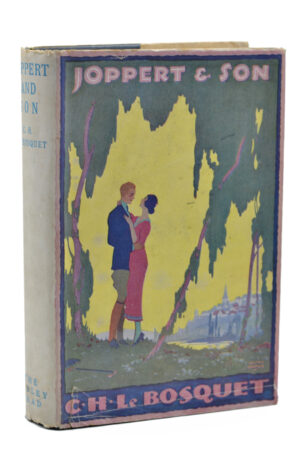

Modern Literature
London, Bodley Head, 1923.First edition. 8vo. 8pp. advertisements. Original cloth. Dust-jacket, without price.Great jacket artwork by Canadian–British illustrator and commercial artist Austin Cooper (not the car).


Modern Literature
First edition.
London. Neville Spearman, 1957
A well regarded collection of short stories mainly set in the American South and most of them among poor people. The short story that gives the book refers to statues popular in the Jim Crow-era Southern United States, depicting grotesque minstrel-like characters.