


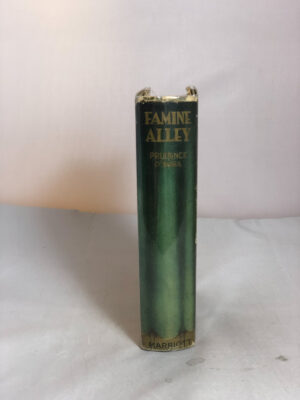


O’Shea (Prudence) Famine Alley.
£195
London, Marriott, 1930
First edition. 8vo. Original cloth, Dust-jacket correctly priced at 7/6 on front flap.
Rare in dust-jacket.
In stock
VG/VG. Area of fading to top part of front board and top edge of back board. Foxing to prelims and sporadically to page edges. The jacket has a a couple of closed tears to front panel; a coffee cup stain to rear panel and some modest edge-wear.
Related products
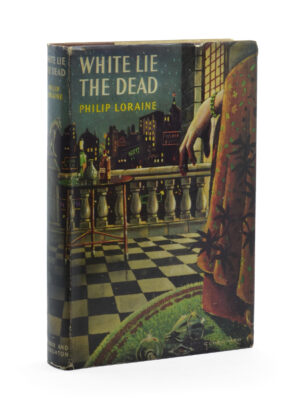

Detective Fiction
London, Hodder & Stoughton, 1950
First edition, first impression. 8vo. Original boards, Dust-jacket.
A near fine example of this the first book by the author using this pseudonym. An uncommon classic of crime fiction, revolving around a sudden death at a cocktail party.

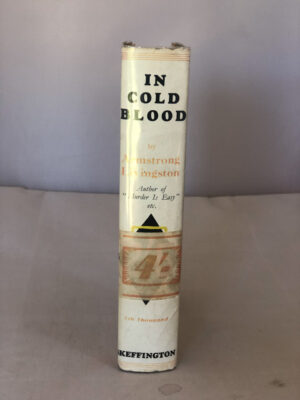
Detective Fiction
First edition, ‘7th thousand’.
London, Skeffington, [1932].
Skeffington often used ‘7th thousand’ label on title page to try and show that their titles were in high demand so this is not necessarily a reprint.A Hubin-listed mystery featuring the author’s serial character, detective-crook Jimmy Traynor.


Detective Fiction
Edinburgh & London, William Hodge & Company, Limited, 1927
First edition, inscribed presentation copy from the author. 8vo. Original red cloth. Dust-jacket.
A very good copy. Inscribed by the author, one presumes, thus: 'To dear Winifred, with much love from an affectionate old friend Winnie, in remembrance of her visit to Station House. June 1927.' An easy to find book, but very uncommon both inscribed and in jacket. Contains a novel and two shorter pieces.


Detective Fiction
London, John Gifford Ltd, [1938].
First edition. 8vo. Original cloth. Dust-jacket, correctly priced 7/6.
A distinctly hard-to-find title by the creator of The Black Pilgrim.

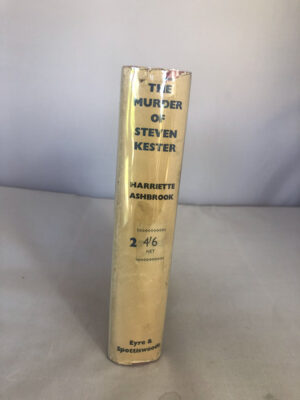
Detective Fiction
First edition.
London, Eyre & Spottiswoode, 1933.
When the dignified life of Steven Kester came to an undignified end there were several people with potential motives. Serial character Spike Tracy acts as detective and solves the mystery.Rare in d/w.