


Adichie (Chimamanda Ngozi) Purple Hibiscus
£275
London, Fourth Estate, 2004.
First UK edition, first impression. Signed by the author. 8vo. Original boards. Dust-jacket.
A coming-of-age novel that follows 15-year-old Kambili Achike in post-colonial Nigeria. Adichie’s works, including Half of a Yellow Sun and Americanah, have received critical acclaim and numerous awards.
In stock
A near fine copy.
Related products


African literature
London, Heinemann, 1960.
First edition. 8vo. Original cloth. Dust-jacket, priced 13s6d.
A lovely first edition of this tale of Lagos corruption by Nigerian writer Achebe, the scarce second volume in Achebe's landmark 'African trilogy'.


African literature
London, Dorothy Crisp, [c.1946].
First edition. 8vo. Original green cloth. Dust-jacket, priced 8s 6d.
First published in South Africa in 1946, Peter Abrahams' classic novel Mine Boy exposed South Africa's fledgling racial apartheid system and townships to the world - and its wisdom, vividness and political power endures to this day.


African literature
London, Jonathan Cape, 1948.
First edition. 8vo. Original cloth. Dust-jacket, priced 9s6d.
Paton's searing indictment of South African society, published on the eve of the South African government formally institutionalising apartheid, one of the best-known and most acclaimed works in South African literature.


African literature
London, Geoffrey Bles, 1937.
First edition. Inscribed presentation copy from the author. 8vo. Original black cloth. Dust-jacket, 10s6d.
"In Black Hamlet perhaps for the first time the soul of the negro is laid bare." (jacket blurb). A somewhat chilling psychoanalytical undertaking to delve into the mind of "John", a young man from Manyikaland who had moved to the city.

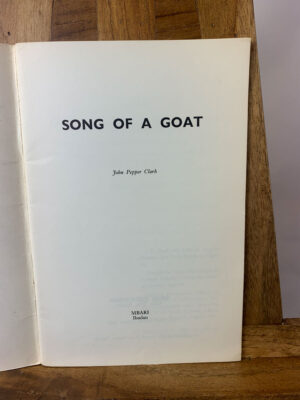
African literature
Ibadan, Mbari Publications, 1961.
First edition. 8vo. Original pictorial wrappers.
The Nigerian author's first published dramatic work, scarce in such condition. Clark (1935 - 2020) played an important role in the evolution and dissemination of African literature, not least as the co-editor of the Pan-African magazine Black Orpheus.