


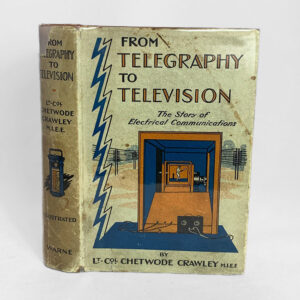


Crawley (Chetwode) From Telegraphy to Television
£125
London, Warne, [1931].
First edition. 8vo. Original brown cloth. Dust-jacket, priced 6/-.
The Story of Electrical Communications.
In stock
Prize plate to front pastedown; a very good copy; jacket rubbed with tear and chip from spine ends, otherwise very good.
Illustrations.
Related products


A record of progress and achievement in facts and figures
Shanghai, China United Press, 1935.
First edition, first impression. 8vo. Original cloth. Dust-jacket, priced $15.
Leang-Li T'ang was a prominent Chinese historian, author, and editor, recognised for documenting the socio-political and economic developments in early 20th-century China.
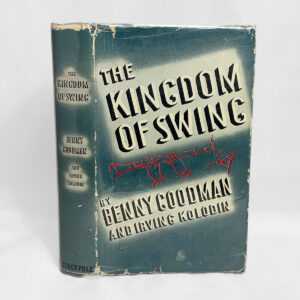

New York, Stackpole, 1939.
First edition. 8vo. Original black cloth. Dust-jacket, priced $2.00.
The first edition of this account of big band swing by one of the leading band leaders of all time, his concert at Carnegie Hall in 1938 described by one contemporary critic as "the single most important jazz or popular music concert in history: jazz's 'coming out' party to the world of 'respectable' music." Swing began to lose favour after this time, so this book marks an interesting period in 20th century popular music.


Non-Fiction
Aberdeen, Impulse Books, 1971.
First edition. 8vo. Original red boards. Dust-jacket, priced £2.00.
Uncommon account of the early days of pirate radio.


Non-Fiction
London, George Allen & Unwin, 1932.
First UK edition. 8vo. Original grey cloth. Dust-jacket, priced 8s6d.
The Count was a member of the ancient Sforza dynasty, descendant from a branch of the Dukes of Milan, and related to the Pallavicini family as well as other Italian families such as the Medici and Orsini.


London, Smith, Elder, 1907.
First edition. Landscape folio. Original brown pictorial cloth.
British author, illustrator and war hero Robert Baden-Powell recounts his adventures across South and East Africa in this profusely illustrated memoir. He devotes a chapter to his most famous exploit, the siege of Mafeking, in which he successfully held off the South African Republic's Burghers during the Second Boer War. Baden-Powell went on to found the Boy Scout movement.